Welcome to Joanna Poppink’s Healing Library for Midlife Women

Psychotherapy insights, tools, and support for your journey 


Poppink psychotherapy transforms self-doubt and limited beliefs into strength, growth and change.
Move from compliance to authentic living.
 
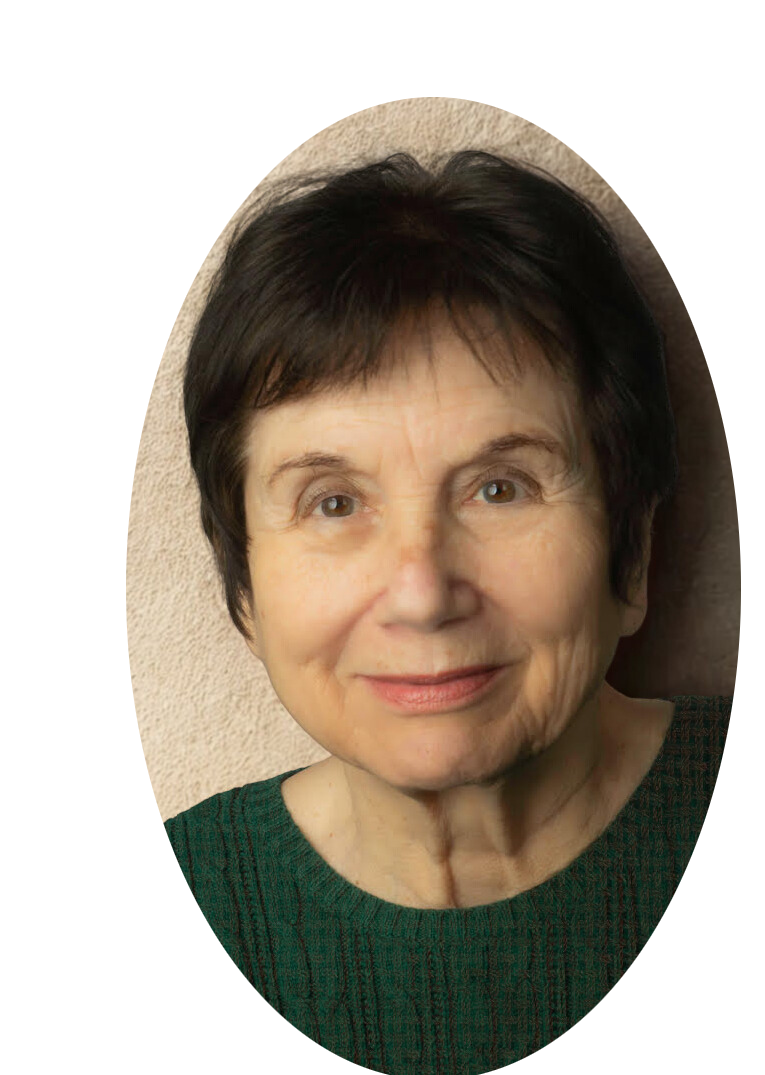
Joanna Poppink, MFT
Depth Psychotherapist
serving Arizona, California, Florida and Oregon.
All appointments are virtual.
 
Please email Joanna for a free telephone consultation.
 [email protected]


  • Home
  • Free Workbook
  • Psychotherapy
  • Joanna's Book
  • About
  • FAQ
    • Media Info
  • Contact
Table of Contents
Latest
Most Popular
Categories
Affirmations

The Return of Meaning

Details
Category: Recovery & Healing

Return of meaning

Return of Meaning: How psychological integration restores purpose, coherence, and moral vitality

By Joanna Poppink, MFT

Series Note
This is Article 5 in the seven-part series, Claiming the Lost Self. The series explores how women lose contact with their inner truth through early distortions of love and loyalty, and how depth psychotherapy supports the return of the self that survived beneath years of adaptation. Each article traces the movement from silence to recognition, strength, clarity, and inner authority.

Summary

The return of meaning emerges when a woman senses that her suffering carries direction. Meaning does not arrive as happiness. It arrives as coherence. Conflicts that once felt random reveal purpose. Symptoms that once discouraged her become signals from the psyche. As the self that never died rises from years of hiding, life begins to align around what is real rather than what has been endured. This article explores how meaning returns through psychological integration, moral clarity, embodied awareness, and spiritual renewal in midlife healing.

Read more …

Inner Stability in an Unstable World

Details
Category: Recovery & Healing


Instablility in an unstable world: for midlife women

Inner stability in an Unstable World

By Joanna Poppink, MFT

Summary

When external chaos is ongoing, inner stability is not a feeling. It is a set of capacities that a woman slowly builds and strengthens. We all live in today’s world, characterized by ongoing instability. Political turmoil, economic uncertainty, social fragmentation, and threats to personal autonomy create a state of perpetual alertness. This article addresses how this impacts a woman with a past or current eating disorder. When she lives at the edge of her stress tolerance, even minor disruptions can overwhelm her. Her nervous system overloads and activates eating disorder behaviors. Today, more than ever, recovery needs to strengthen her inner stability so she can face external chaos without collapsing into old survival systems.

Inner Stability in an Unstable World

External instability creates a constant strain on the nervous system. What once felt like ordinary stress now lands on a system already pushed to its limits.

Women live in an environment in which fear is never fully released. Inner stability can be fragile. News cycles warn of danger from civil unrest and ICE arrests. We see unrelenting coverage and experience the impact of changes in the law and voting rights, inflation, less reliable health care, tension and violence between countries, and the destruction of familiar national landmarks. The rights of women are at risk. Healthcare is less available and more costly.  An unexpected bill or price hike can impact personal finances. Climate change disrupts the ordinary seasonal patterns we have come to expect. The future is unclear.

This constant instability pushes many women into a permanent state of readiness for the next blow. Her nervous system never resets. She adapts by staying alert, managing risk, and scanning for threats. When a woman has used an eating disorder to regulate emotional overload, this chronic external stress becomes the foundation on which every stressor lands.

When Instability Outside Overwhelms Inner Stability

When a baseline is already overloaded, the smallest increase in pressure can activate a survival responses.

Why “small problems” feel threatening

Stressors accumulate. What appears minor is experienced as the final impact that collapses her remaining capacity.

Ordinary or mild shifts in routine can push a woman on the containing side of her eating disorder over into acting it out.

Examples can be mild or significant:

• A sudden increase in insurance premiums

• A dentist appointment that must be rescheduled

• A child’s illness requiring missed responsibilities

• A new skill required at work with little warning

• Clothes cleaning delay

• A flat tire in the driveway

In a stable world, these situations can be manageable irritations.

In an unstable world, they can be a tipping point.

Her system is not reacting to the car repair or the scheduling conflict. It is reacting to years of tension that have been piled beneath it.

When she reaches her tipping point, she shuts down her appetite or binges for relief or exercises until she is numb. This response is not irrational. It is a learned survival reflex that activates when life feels unsafe.

How Midlife Women Experience Emotional Pressure and Eating Disorder Recovery Challenges

External expectations remain high while emotional reserves are depleted.

Daily life requires a new level of inner stability and strength.

Minor disruptions can cause a collapse in functioning when capacity is already at its limit.

The One Who Must Stay Composed

She manages her household, aging parents, and financial demands. News of rising healthcare costs arrives. It is one more challenge on top of many. She hits an emotional wall and restricts food because disappearing feels easier than confronting more responsibility.

The High Performer

Work expectations grow while job security shrinks. She overeats in secret because eating offers a momentary stop to the pressure. Shame returns, and the cycle deepens.

These behaviors are not signs of personal failure. They arise from a world that requires more effort and inner stability than ever before.

The Body Signals Stress Before the Mind Understands It

The body shows vulnerability first; the mind tries to keep up.

The nervous system reacts to a threat faster than conscious thought.

This is biology, not weakness.

Before the mind forms a sentence, the body reacts:

• Heart rate increases

• Stomach tightens

• Breathing shortens

• Muscles prepare for impact

The eating disorder offers immediate action to reduce discomfort. It takes over because that is what it was built to do.

Recovery begins when a woman learns to recognize the context of her distress.

This is not about the spilled cereal.

This is about the world I live in.


Inner Stability Skills That Reduce Eating Disorder Reactions

Stability grows as a woman develops skills that allow her to respond before symptoms activate.

Pausing interrupts the automatic, out-of-date survival system.

This makes space for choice and self-support.

Inner work includes:

• Recognizing when the reaction exceeds the event

• Naming the real source of overload

• Pausing before acting

• Staying connected to physical sensation

• Understanding what the eating disorder is trying to manage

• Choosing action based on values instead of fear

• Allowing support without collapsing identity

This inner work builds capacity. She becomes able to handle more of life without collapsing or self-punishment.

Depth Psychotherapy Strengthens Inner Authority

When external reality is unstable, inner authority must take the lead.

Depth therapy supports the woman in becoming more reliable and steadfast.

This represents a reorganization of the relationship with oneself.

Therapy supports:

• Understanding what her body is signaling

• Separating current stress from old trauma

• Regulating the nervous system before action

• Identifying beliefs shaped by fear

• Choosing a response rather than collapsing into reaction

• Building a connection to self as a secure base

Inner authority grows. She becomes someone she can depend on.

Grounded Recovery for Midlife Women in a Relentless World

Recovery focuses on building a self that remains intact under pressure.

The body can remember calm and inner stability even when the world does not offer it.

Real safety signals create real relief.

A calm shoreline is not an escape into fantasy. It is a real interaction between the body and a stable environment. Light, air, and motion give the nervous system new information.

The danger is not here.

I can continue.

This grounding offers the possibility of stability without self-harm. Recovery is not self-improvement. It is reclaiming the capacity to respond to the world rather than be ruled by it.

Women in midlife and beyond are particularly suited for this developmental work. They have lived enough life to recognize when the old ways no longer serve them. They are ready for an inner stability that does not depend on constant self-policing.

With reflection and support, they can develop their inner strength to cope effectively in this changing and unstable world with sturdiness and courage.


Further Reading and Research Support

• Reclaiming Inner Authority — Joanna Poppink, MFT
• Depth Psychotherapy for Midlife Women — Joanna Poppink, MFT
• Depth Oriented Recovery for Eating Disorders: Beyond Symptoms — Joanna Poppink, MFT


• Economic uncertainty and mental health: Global evidence
• Eating disorders in midlife — Harvard Health Publishing
• The social determinants of mental health and disorder
• Women, disasters and resilience — American Psychiatric Association

About Joanna Poppink, MFT
Joanna Poppink, MFT, is a depth oriented psychotherapist specializing in psychotherapy for midlife women, eating disorder recovery, and recovery from the impacts of narcissistic abuse. She is licensed in California, Arizona, Florida, and Oregon, and offers secure virtual sessions. If you sense your deeper self pressing upward and are ready to explore this work, please reach out. For a free telephone consultation, write This email address is being protected from spambots. You need JavaScript enabled to view it. or visit www.eatingdisorderrecovery.net.


Claiming the Lost Self: An Essential Task for Midlife Women — a seven part series.
You may begin with the series introduction here.

Reclaiming Inner Authority in Midlife

Details
Category: Recovery & Healing

reclaiming inner authority

Reclaiming Inner Authority

By Joanna Poppink, MFT

Summary

Inner authority is the quiet strength that arises when a woman’s perception, emotion, and action align under her own truth.

Reclaiming it means no longer organizing life around compliance, approval, or fear of rejection. The work of depth psychotherapy is to move from outer obedience to inner leadership, from imitation to authenticity.

The Erosion of Inner Authority

For many women, the loss of inner authority begins early. Parents, teachers, and culture reward obedience and punish defiance. Approval becomes the currency of belonging. A girl learns to read the room before she learns to read herself.

Over time, the capacity to sense what she knows and feels becomes muted. She learns to doubt her intuition. Her nervous system adapts to external demand: a polite smile instead of protest, shallow breath instead of voice. She may appear confident, yet her choices orbit the expectations of others.

This erosion is not a weakness—it is a survival mechanism. But what kept the woman safe in the past can keep her trapped in adulthood. When she cannot act on her own truth, she becomes divided against herself.

Recognizing the Divide

The first step toward reclaiming inner authority is recognizing the inner conflict.

A woman may say yes when every fiber of her body says no. She may experience chest pain after agreeing to something that betrays her needs. She may sense her vitality fade each time she suppresses her opinion to preserve harmony.

These symptoms are not character flaws; they are signs of misalignment between inner knowing and outer behavior. The psyche calls for reconciliation.

Depth psychotherapy begins with listening to this conflict. The therapist does not impose solutions but helps the woman translate the body’s language—tension, fatigue, tears, silence—into meaning.

(See also Reversing the Narcissist’s Gaze and Depth-Oriented Psychotherapy for Midlife Women.)

Psychological Reclamation

Reclaiming inner authority does not mean becoming willful or rigid. It means restoring the connection between perception and action. The woman learns to ask: What do I truly feel? What do I know to be real? Why must I accept this conflict? What action honors my truth?

Dreams often support this work. A woman may dream of speaking before an indifferent or antagonist crowd, finding her voice in silence, or walking away from a house that no longer feels like home. These symbolic scenes reflect the psyche’s effort to re-establish inner command.

Journaling, guided imagery, and quiet reflection reveal the difference between fear-based obedience and soul-based integrity. As this awareness grows, the woman's decisions become less reactive and more grounded.

(Read more in Guided Imagery and the Unconscious Dialogue.)

Embodied Authority

Inner authority is not only a psychological stance; it is embodied reality.

When a woman begins to trust herself again, her breath deepens. Her voice steadies. Her posture lengthens. She occupies space differently.

These shifts are not superficial; they signal that the nervous system recognizes internal safety. The body no longer prepares for compliance; it prepares for truth.

She may find herself pausing before responding, checking in on her internal experience rather than performing. She may notice that boundaries no longer require anger to hold. Quiet confidence replaces the need to prove.

Such embodied presence communicates authority without force. It invites respect because it emanates from self-respect.

Freedom and Responsibility

Reclaiming inner authority does not mean rejecting others or living in isolation; rather, it means embracing a balanced perspective.

It means taking responsibility for one’s own perceptions and choices. A woman with inner authority can listen deeply without surrendering discernment. She can care without being consumed.

Freedom, in this sense, is not impulsive independence—it is the disciplined practice of truth. It is the courage to stand by one’s own vision even when misunderstood.

Depth psychotherapy nurtures this discipline. Over time, the woman relaxes into her self-trust. It guides her choices. Her life no longer organizes around adaptation. She is organized from within around her authenticity.

Integration: Living from Inner Authority

As inner authority strengthens, relationships change. Some deepen; others end. Authoritarian relationships no longer approach her or, if they do, they don't stay long. New relationships enter her life on the basis of mutual respect and genuine interest.

New relationships enter her life on the basis of mutual respect and genuine interest.

Work, creativity, and love begin to align with what holds meaning for her, rather than obligation. The woman discovers that inner authority and compassion are not opposites—they arise from the same source: integrity of being.

 The woman discovers that inner authority and compassion are not opposites—they arise from the same source: integrity of being.

This is mature freedom—the ability to act, speak, and love without betraying the woman's own values.

Resources

  • Healing Your Hungry Heart: Recovering from Your Eating Disorder — Joanna Poppink, MFT
  • Marion Woodman, Addiction to Perfection
  • James Hollis, Finding Meaning in the Second Half of Life
  • Clarissa Pinkola Estés, Women Who Run With the Wolves
  • Joanna Poppink, The Fear of Speaking Up in Midlife Women

About Joanna Poppink, MFT
Joanna Poppink, MFT, is a depth oriented psychotherapist specializing in psychotherapy for midlife women, eating disorder recovery, and recovery from the impacts of narcissistic abuse. She is licensed in California, Arizona, Florida, and Oregon, and offers secure virtual sessions. If you sense your deeper self pressing upward and are ready to explore this work, please reach out. For a free telephone consultation, write This email address is being protected from spambots. You need JavaScript enabled to view it. or visit www.eatingdisorderrecovery.net.


Claiming the Lost Self: An Essential Task for Midlife Women — a seven part series.
You may begin with the series introduction here.

Reversing the Narcissist’s Gaze

Details
Category: Recovery & Healing

reversing the narcissist's gazeReversing the narcissist's gaze.  How to see yourself clearly with your own eyes.

by Joanna Poppink, MFT

Summary

Reversing the narcissist’s gaze means breaking free from the distortion of seeing yourself through another person’s eyes. When a woman lives too long under that gaze, her sense of reality narrows to fit someone else’s story. Depth psychotherapy helps her reclaim her vision—seeing with clarity, depth, and compassion from within.
This recovery is not about revenge or judgment. It is about freedom: the restoration of inner sight and truth.

Read more …

  1. The Rescue Dream
  2. The Fear of Speaking Up in Midlife Women
  3. The Dream that Opens the Way
  4. Meeting The Self Who Never Died
  5. Dreams of the Rescuer
  6. Following the False Map of Love
  7. Discouragement versus Depression in Midlife Women
  8. Depth Oriented Recovery for Eating Disorders: Beyond Symptoms
  9. Why Eating Disorder Treatment Needs Depth Oriented Recovery Work
  10. Workplace Sabotage: Why and How Talented Women Are Undermined

Page 2 of 42

  • 1
  • 2
  • 3
  • 4
  • 5
  • 6
  • 7
  • 8
  • 9
  • 10

Best Eating Disorder Blogs

Good Faith Estimate as required by the No Surprises Act


Eating Disorder Hope member badge

EDReferral.com member badge

Mental Health Match Badge

Who's Online

We have 12705 guests and no members online


User Tools

  • Login
  • Logout
  • Reset Your Password
  • Send Registration Reminder
  • Register

Healing Your Hungry Heart - the book

  • Welcome
  • HYHH Website
  • Joanna's Book
  • Media Info


Grab a feed for this page!

Copyright © 2025

  • Terms & Conditions
  • Site Map
  • Privacy Policy
  • Copyright